
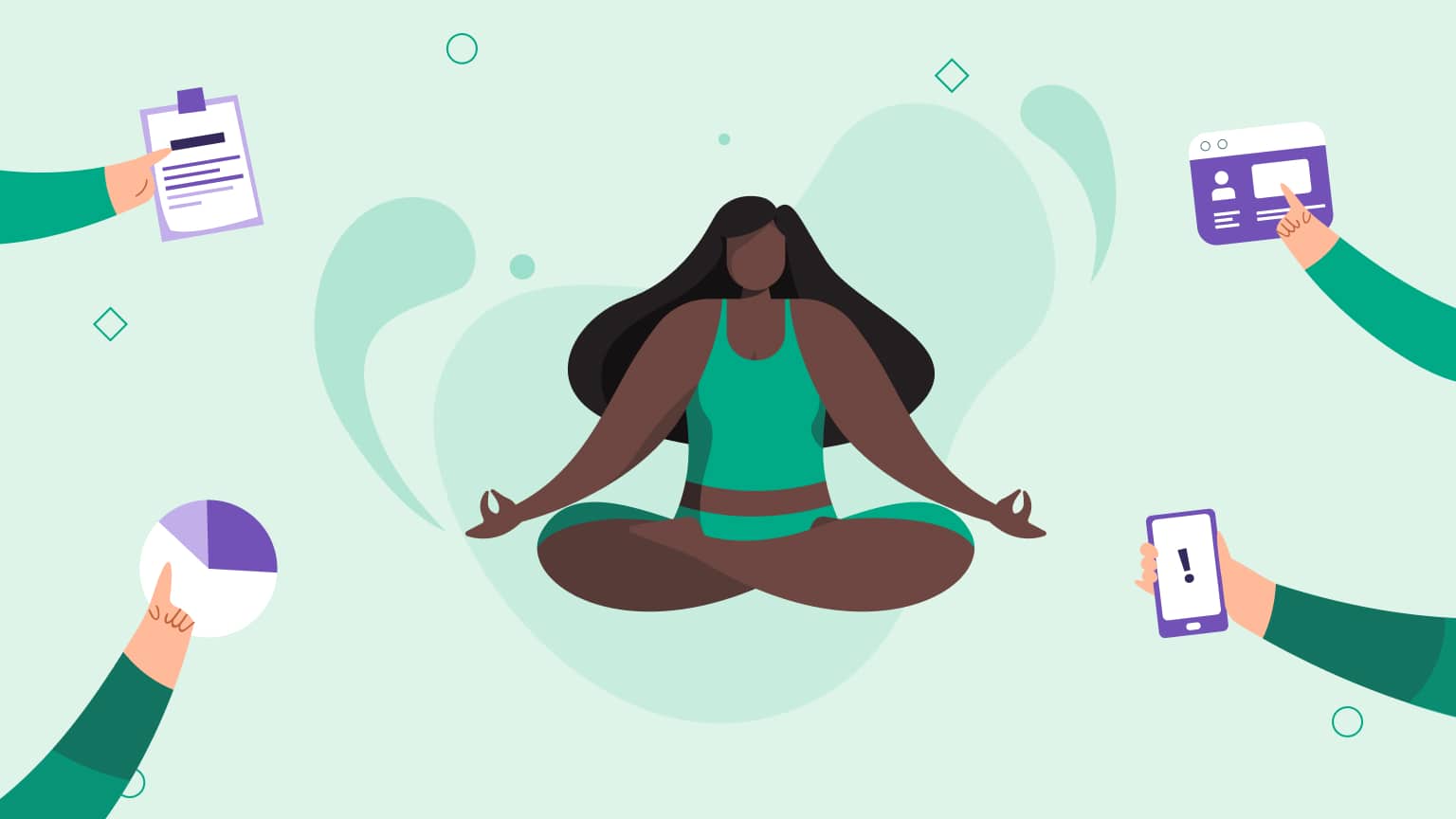
A little stress is not a bad thing. In fact, it can be good for you and help you perform better. The key is to make sure that the level of pressure you experience (or put on yourself) does not structurally exceed what you can handle. There’s plenty you can do yourself to keep things in balance.
To manage workload effectively, you need to be able to keep stress under control. Some people are naturally better at this than others. Where one person turns tension into alertness and easily switches between tasks, another may panic.
What does workload mean?
Excessive workload becomes a problem when you have too little time to complete the work that’s expected. Or when you constantly feel like you’re stretched to your limits just to meet the required standard. This creates tension, also known as stress.
If this tension remains manageable and the expectations are just slightly beyond your current abilities, it’s called creative tension. This kind of tension helps you learn, develop, and expand your capabilities.
But when the tension becomes too high, it affects your enjoyment at work, your creativity, your work-life balance, and your effectiveness. If the pressure continues for a long time, stress can exhaust and demotivate you, causing symptoms such as restlessness, concentration problems, crying spells, anger outbursts, low self-esteem, sleep issues, skin irritation, and headaches.
Managing stress isn’t always easy. These tips can help you keep stress and workload under control.
Tip 1: Know what causes your stress
If you want to manage stress, start by identifying what triggers it. Which people, situations, tasks, and uncertainties make you tense? Once you know, you can take action—by mentally preparing yourself and reminding yourself that the situation is temporary. You can also practice handling stressful situations at home. Visualize how you will approach and successfully complete the situation. This helps you regain control and reduces stress.
Tip 2: Avoid en prevent chaos
A messy home, a chaotic workspace, and lack of structure are perfect ingredients for stress. Where are the things you need? What should you do first? Prevent chaos and work smarter. Set priorities and be realistic. Make daily to-do lists with what truly needs to get done. Don’t postpone difficult or unpleasant tasks—do them when you’re fresh in the morning (or at the start of your shift). Procrastination leads to chaos and stress.
Also, don’t skip coffee or lunch breaks. Take a step back and give your body and mind the rest they need to recharge. You’ll notice that you’ll handle stress much better.
Tip 3: Know what you want
Don’t let your life be guided by other people’s decisions—take the reins yourself. This makes you stronger and more confident. Knowing what you want also reduces stress, because you’re shaping your life in a way that suits your needs. And it’s perfectly fine to say no sometimes.
Let go of perfectionism, stay realistic, and focus on what’s achievable. If something doesn’t go as planned, let it go. You did your best. That’s enough.
Tip 4: Learn to think positively
Seeing life from a positive angle gives you energy and helps you handle stress. Start your day cheerfully and appreciate what you have: health, family, food, safety, and more. Don’t immediately zoom in on everything you need to do. Relax!
Facing a tough task? Believe in yourself. Tell yourself you’ve got this, and tackle it step by step. You really can do it. Don’t give in to negativity—that’s when stress creeps in.
Tip 5: Accept and let go
Accept things as they are instead of trying to force them into your control. Doing so leads to frustration and unnecessary stress. What’s happened is in the past, and you can’t change it anymore. Don’t dwell on what if questions—they don’t solve anything.
Let go of the past and focus on the here and now. Think in terms of solutions and make decisions based on what you currently know. You’ll feel calmer and more relaxed than when you keep worrying and overthinking.
Tip 6: Improve your physical and mental fitness
Your physical and mental fitness significantly affect how well you cope with stress. Aim to move for at least 30 minutes a day—cycle, run, clean, jog, or garden. Physical activity lowers stress hormones and releases endorphins, your natural feel-good chemicals.
Healthy and regular eating, drinking plenty of water, and reducing caffeine and alcohol also strengthen your resilience. In addition, sleep about seven hours per night. Altogether, these habits help you stay balanced, feel good, and reduce stress.
Tip 7: Laugh often and cherisch friendships
Laughing a lot and nurturing meaningful friendships help combat stress. Start right away. Create moments of joy with colleagues at work and find humor in everyday situations.
Outside work, invest time in family and friends. They provide support when you’re struggling—their presence, a comforting arm around you, and doing things together make managing stress easier.
Have you tried everything but still feel like your workload is out of control? Talk to your manager and see if you can find a solution together.
About Fan Factory
Improve your employee journey with Fan Factory.
- Reduce unwanted turnover, boost productivity, and give every new colleague a warm welcome with your unique onboarding program.
- With our all-in-one employee app, you can instantly increase engagement within your organization. The Fan App helps you streamline internal communication, onboard employees step by step, make learning fun, and connect to all other systems you use.
- Discover where to start to turn your employees into committed ambassadors. The Fan Scan provides insight into satisfaction levels, priorities, and concrete next steps. This reduces turnover and absenteeism and maximizes employee value.
Get inspired, book a free demo!